Journey into Retro-Tech Nostalgia - Part 1
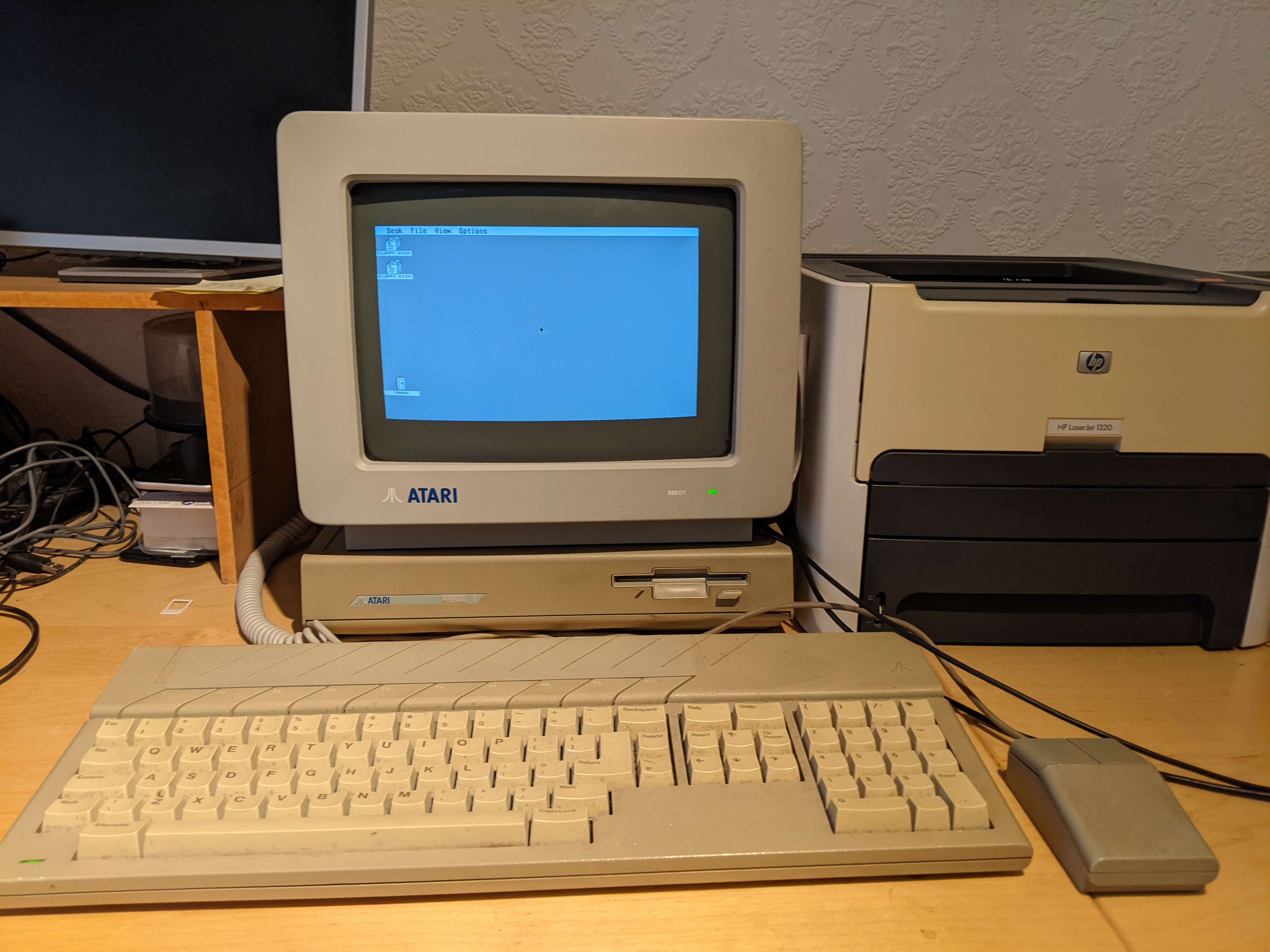
Tech nostalgia is becoming a thing. I won’t go into the reasons but suffice it to say that society is going through a long overdue introspection about its relationship with technology.
It’s amazing to me to see a generation of software developers younger than me yearn with fascination for the older, primitive days of computing (they want to try coding in assembly – really?!). Having grown up in the eighties I have extra reason to be nostalgic about tech. It's particularly important to look back now and then and remind yourself about what got you excited about tech in the first place, enough to want to work in it. We are somewhat wrapped-up of late in analysing aspects of modern technology, but rarely do we examine what it has become in contrast to our early expectations of it.
The future offered by technology back in the eighties seemed so open, so full of possibilities. The future, back then, was exciting. It was where I would spend the rest of my life, after all! Tron was showing in the cinemas. Tech became personal and accessible with the advent of the Walkman and the personal and home computers. Halt & Catch Fire wasn’t some historical fiction TV show – it was our life! I remember flicking through the pages of Byte magazine, looking at all the latest PCs coming onto the market. Some of them so obscure now, they’ve been memory-holed by the industry – the Apricot, the Dragon 32, the Oric Atmos. Everyone had their allegiance to their own preferred model and vendor. Computers were built mostly of discrete components and Integrated Circuit chips with a programmed ROM, but not many custom fab chips yet. In the case of the home computer, it was all usually based around the Motorola 68K family of microprocessors. Right to Repair wasn't a concern. These were the kind of computers that hardcore aficionados could remove the case (sometimes just by popping the cover off like it was a car bonnet) and could “modify” (sometimes using a soldering-iron!).
I worked my final school year summer holidays in a factory making alarm panels just so I could afford my first “proper” computer – the Atari Mega ST. It was named Mega because they were the first Atari models to come with over 1MB of memory as standard. Hard to believe now, I know. It came with an eye-cooling monochrome CRT. No modulator connection to the TV for me, oh no, no frying my eyeballs during long coding session anymore.
I bought a copy of GFA Basic to start learning to code. In those days, computer magazines had code listings, that you could type in to get a free game (pretty simple ones). I remember one long session typing in game code on my old Oric - the one with the dodgy power connection (you can see where this is going) - only to have all the work wiped out when I moved the computer. That was a sobering but vital early lesson in the importance of saving work and having backups.
Maybe it was Tron that started my fascination with computer generated graphics and led me to buy Atari ST 3D Graphics Programming. This excellent little book taught the fundamentals of matrix and vector mathematics, and 3D optimization techniques like back-face culling. Many of the principles I learned in that book carried through to my time using 3D Studio MAX many years later. I still have the GFA Basic code I wrote to try out some of the principles. Here's a video showing my first efforts of a simple random animation.
The video shows a side-by-side comparison with an "optimized" version of the code that uses vector operations to eliminate invisible faces. Even though it's twice as fast, the slow speed of both is pretty shocking compared with modern hardware (and that's even with the Atari's Blitter chip!). The primitive being animated could be defined in a text file, to try different polygon mesh configurations.
That computer was my early professional training sandbox, and those times stood to me well. Is it any wonder I look back on those rudimentary days of computing innocence so fondly, before Internet, before wireless, and before mobile computing devices, before computer speech interaction. Tech moved on, and me with it. I wondered though: could there still be a place for the old within the world of the new? That was the question I'd turn to answer ... in Part 2.